Natalie - Subject Expert

whiteboard-72.jpg

Hi Jag, it looks like you changed the connection between some of your side chains, this answer is not correct. I have drawn the correct structure below and numbered the carbons to show where the new benzyl group is being added to the molecule.

Always draw your structures in the same orientation (view), and number the atoms if you are unsure what has changed, this helps keep track of all the new bonds!

whiteboard-71.jpg

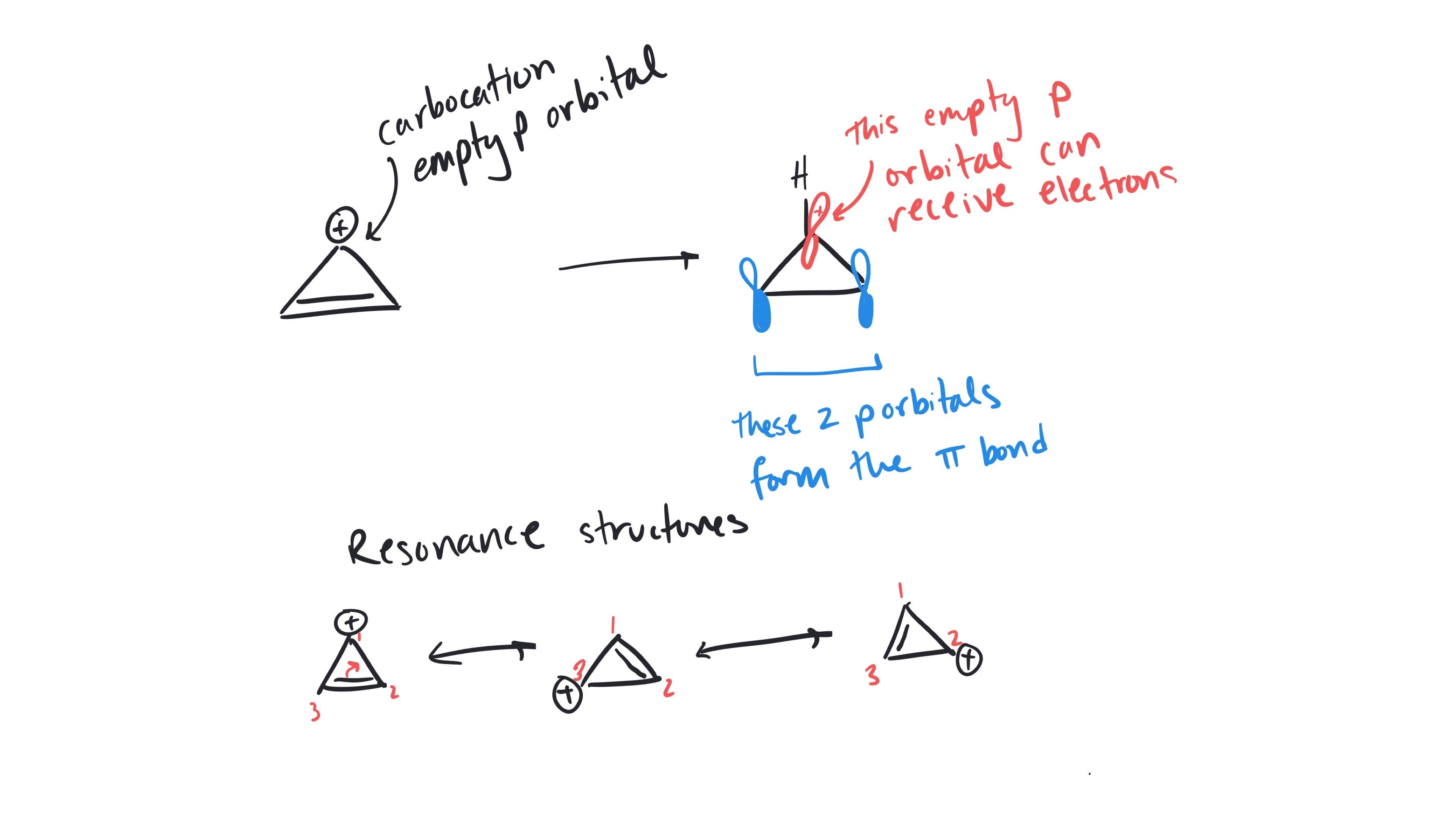
Hi Melanie, this can be confusing for sure! Pi electrons and p orbitals are not the same thing: pi electrons are just electrons in p orbitals. These electrons can go on to make pi bonds with another occupied p orbital. To think about conjugation, you can think about how you might draw a resonance structure. Like drawing resonance structures, no atoms can move but if electrons can move, the system is conjugated.

Melissa is specifically referring to the empty p orbital, which we can also draw as a carbocation. Since carbocations can receive electrons (think resonance!) they are considered conjugated. 
Possibly, however deprotonating the reduced product (alkene) is much more challenging than deprotonating the alkyne. This is because hydrogens attached to sp hybridized carbons (alkynes!) are more acidic than sp2 H's (alkenes). Therefore, you want to add your side chain carbons prior to reduction.

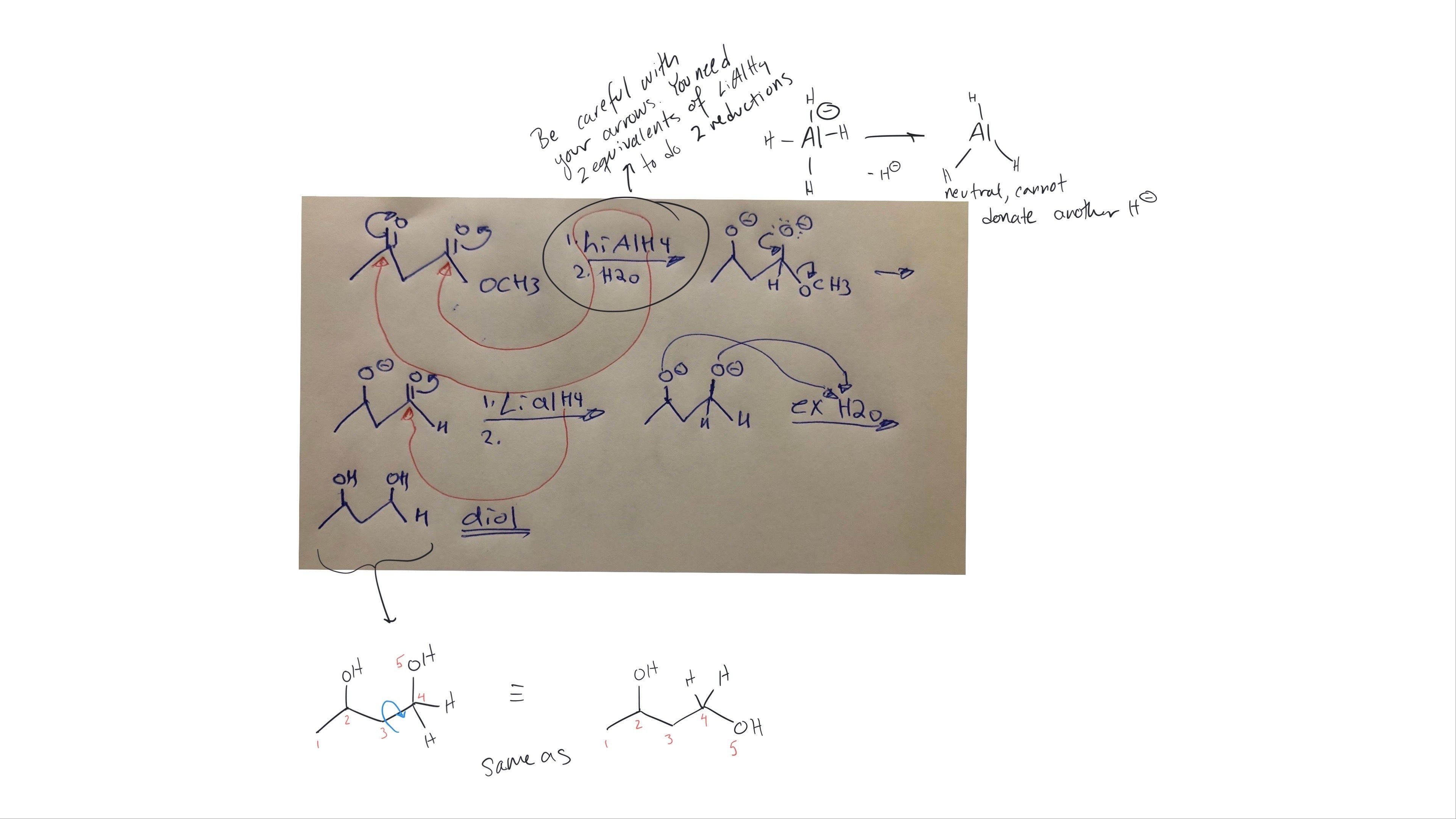
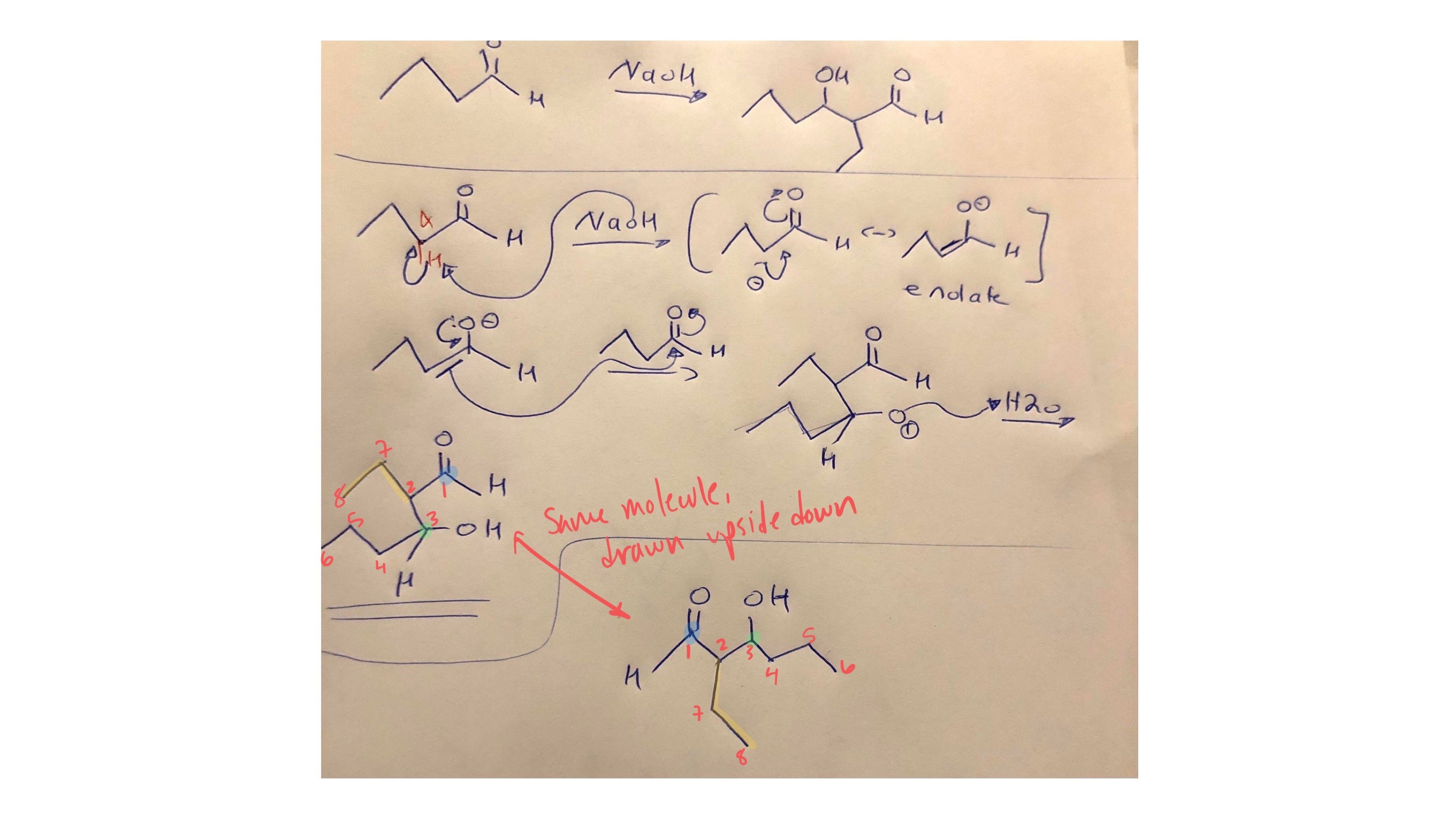
Your product is correct! Remember that moleucles can have the same structure but be drawn upside down and backwards which can be tricky to visualize. It is convention in these types of problems to draw the starting material with both oxygen atoms pointed upwards, like in the video. It doesn't mean your structure is wrong, it just might be harder to visualize.

If you choose to draw your structures differently, remember you may have to reorient your molecule and count your carbons to make sure you have the same product!

Reply
whiteboard-70.jpg

Hi Mona, in these problems it can be really challenging to visualize the molecule in different orientations. The two products you have drawn are the same molecule. Always count (and number!) your carbons to make sure you have the correct structure!I've numbered the carbons and highlighted different functional groups with color to compare the two structures.

assets_tmp_426833059_933928454993267_6495367348270573789_n1707594629.jpg

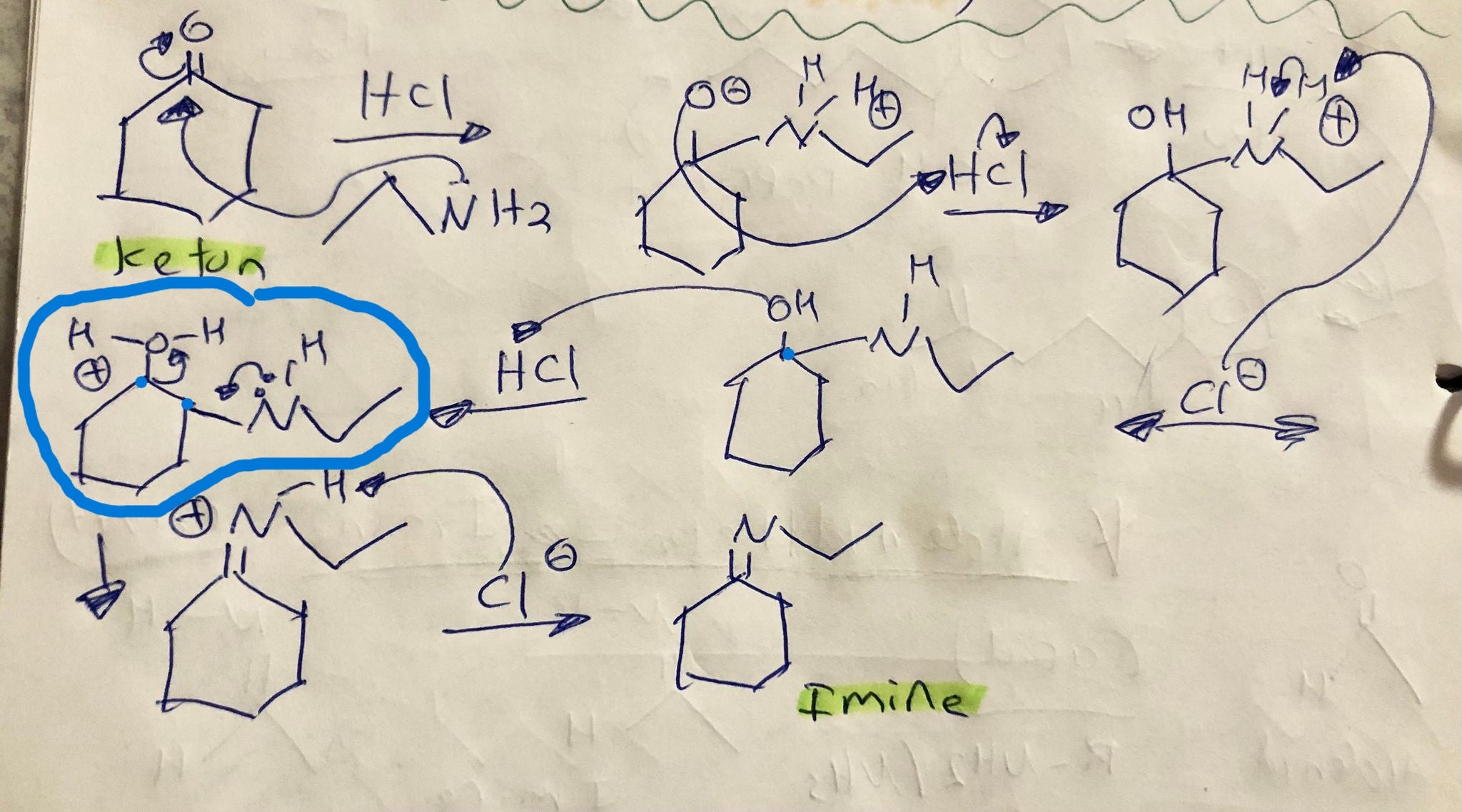
Hi Mona, your arrows look good. Note the structure circled in blue below. You have moved the amine one carbon over, which is the wrong structure here.

Hi Ashley, you're right, Hydrogen is special! It does not obey the octet rule because it has fewer orbitals to hold electrons in. Hydrogen will only ever have 1 bond (2 electrons, no lone pairs) because it only has 1 1s orbital, which like all s orbitals can only hold 2 electrons.

31 Jan 21:36

whiteboard-69-1.jpg

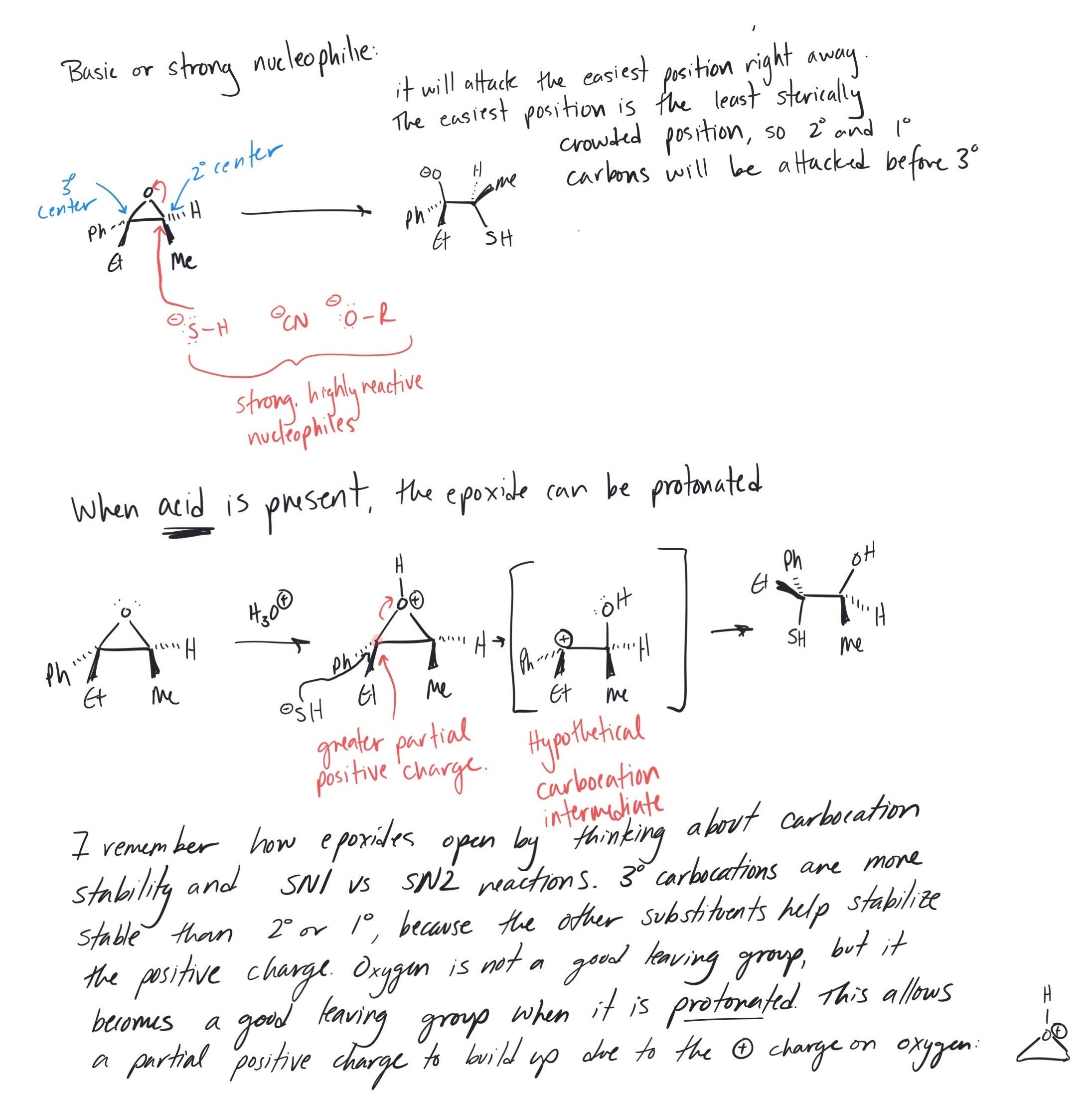
Mona , the two examples from your textbook are under neutral conditions (no acid) which will attack the least substituted position of the epoxide. Therefore you need a strong nucleophile (NaSH, CN, oxygen anions, etc) to attack and open the epoxide. This will occur via an SN2 type mechanism where the nucleophile has to attack the opposite side of the bond being broken (backside attack, inversion of stereochemistry). Because it has to get close to break the bond, the fewer substituents that are in the way of the nucleophile, the faster it will react. That is how we see two different types of reactivity for opening epoxides, pay attention to the conditions!

31 Jan 21:31

Hi Mona, I know these can be really confusing! There are different outcomes (locations of attack) depending on acidic or neutral conditions. First let's talk about the video above at 18:36.

Melissa is specifically talking about the acidic example here, where the epoxide is protonated. In acidic conditions, the nucleophile will attack the more substituted position. Think back to SN1 vs SN2 reactivity (review: https://chemmunity.com/programs/ochem-1-sn1-reactions and https://chemmunity.com/programs/ochem-substitution-and-elimination-reactions-of-alcohols). When the oxygen is protonated, it becomes a good leaving group and can leave to form a carbocation (SN1). This means the more stable carbocation (more substituted position) will be the one that is attacked.  Note: there is still inversion of stereochemistry, the epoxide does not go through a full carbocation, but it helps us think about how the partial positive charge is stabilized.

Reply
whiteboard-66.jpg

Hi Mona , thanks for getting clarification! Your mechanism looks correct, and you have the same product as drawn in the video, just the second alcohol (the one that came from the ester) is in a different orientation. Since this is now a single bond, Melissa has drawn it 'down' in a position in can access through rotation of the C-C bond in the backbone chain.