Natalie - Subject Expert

09 Oct 14:47

This numbering direction gives the substituents the lowest number possible. If you numbered from the other end of the carbon chain, bromine would be at carbon 3. You are correct, you still want to list the bromine substituent first in the name because of the alphabetical ordering.

Reply

Yosra Abdallatif, thanks for your question. Remember when you're using the clockwise/counterclockwise rule, the lowest priority group has to be in the back (facing away from you). If the lowest priority group is facing towards you, the rule is reversed and counterclockwise is R.

whiteboard-28-1.jpg

Hi Melanie, this video should help: Labeling Geometric Isomers E or Z From Given Structure

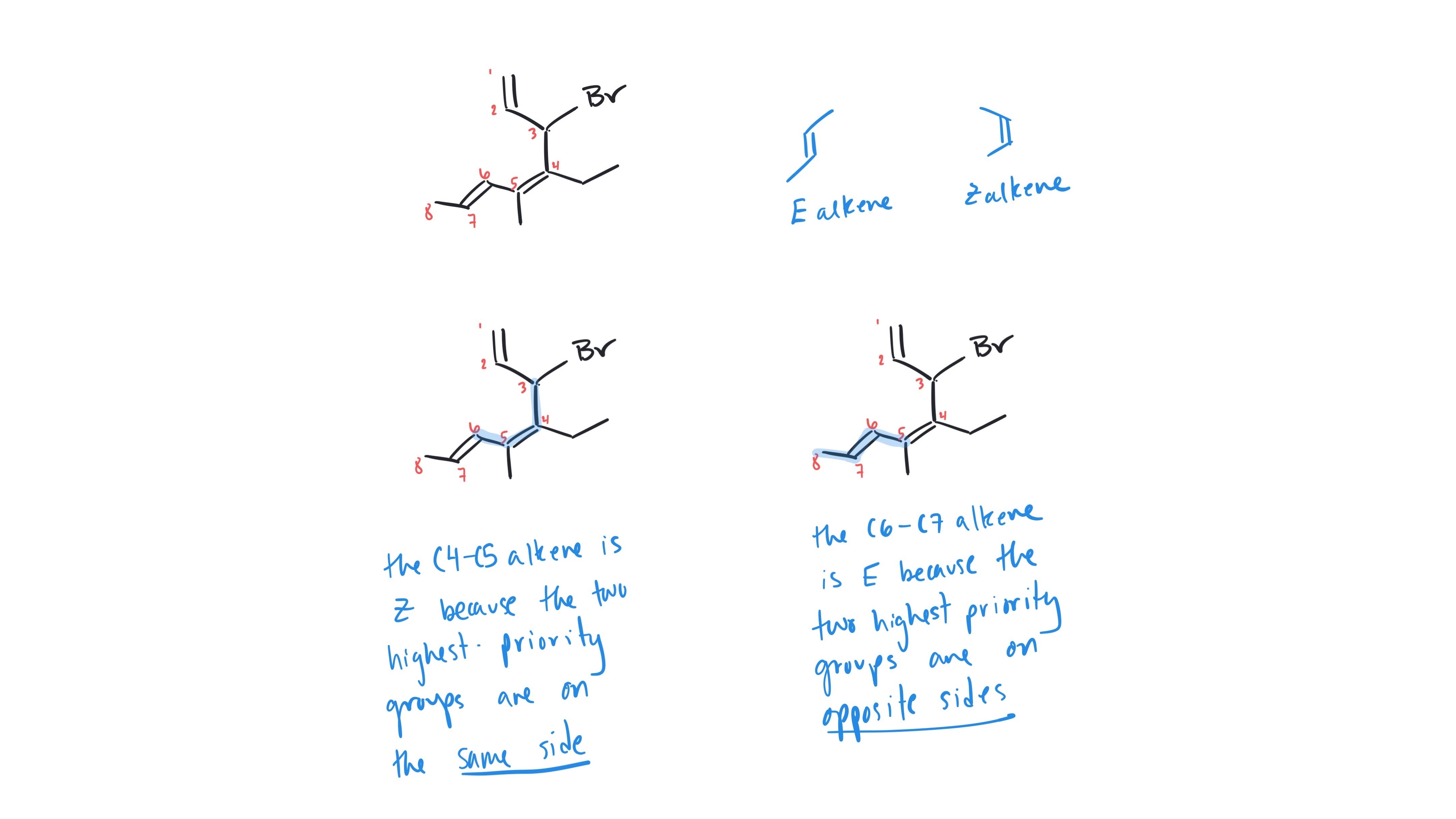
When determining if an alkene is E or Z, you will need to determine the priority of all the groups on both carbon atoms in the double bond. For a refresher on assigning priority, here is a video about assigning R versus Z chirality - the priority works the same for alkene substituents! https://chemmunity.com/programs/r-and-s-configurations

Once you've determined priority, all you need to do is see which side of the alkene the higher priority groups are facing (same side = Z, opposite sides = E).

08 Oct 13:25

Hi Melanie, great question! When we are naming amides, it's important to designate which atoms the substituents are attached to. Another way to think about this is which 'side' of the amide is a substituent attached to.

We want to separate the substituents on Nitrogen from the substituents that come off the carbonyl carbon. Substituents that are attached to nitrogen come first, as designated by the capital N in front of the phenyl substituent. Then all the substituents on the carbonyl carbon come after, so we can tell what substituents are on each side of the amide.

whiteboard-25-1.jpg

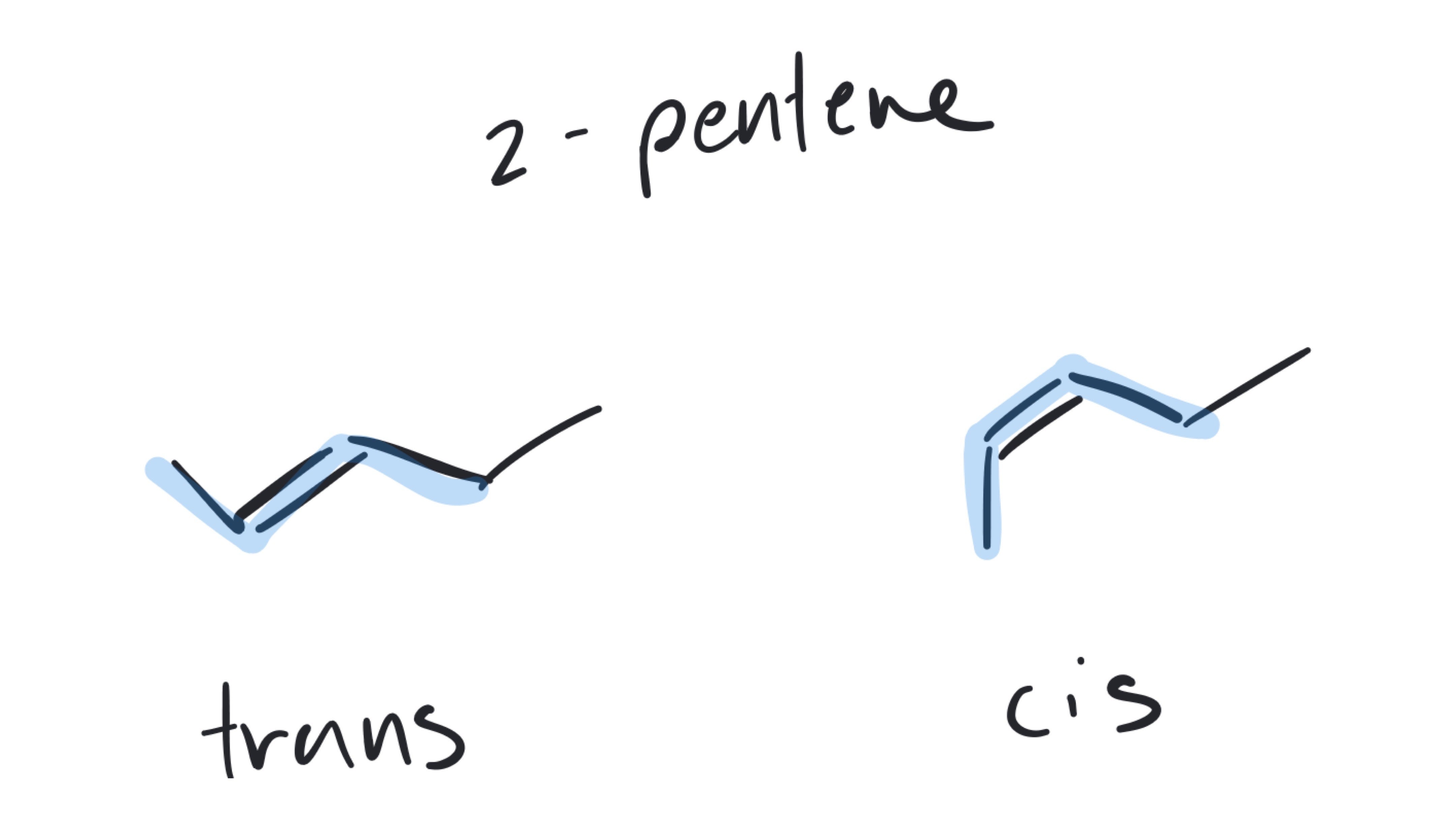
Hi Maysam, thanks for your question. If you're referring to 19:54in the video, there are two possible alkenes - cis and trans 2-pentene. Here Melissa has drawn trans-2-pentene, cis would show the terminal methyl group facing down, on the same side as the carbon chain.

Hi Cody, thanks for clarifying your question below. The answer to the chair flip question at 3:16is not B, because the methyl groups in structure B are attached to carbons 1 and 3, not carbons 1 and 4. Remember that the bonds never change when you do a chair flip, so the substituents must always be attached at the same point on the ring.

I like to draw both possible chairs first, without any substituents, then number the carbons and place the substituents accordingly (up or down).

02 Oct 13:17

whiteboard-25.jpg

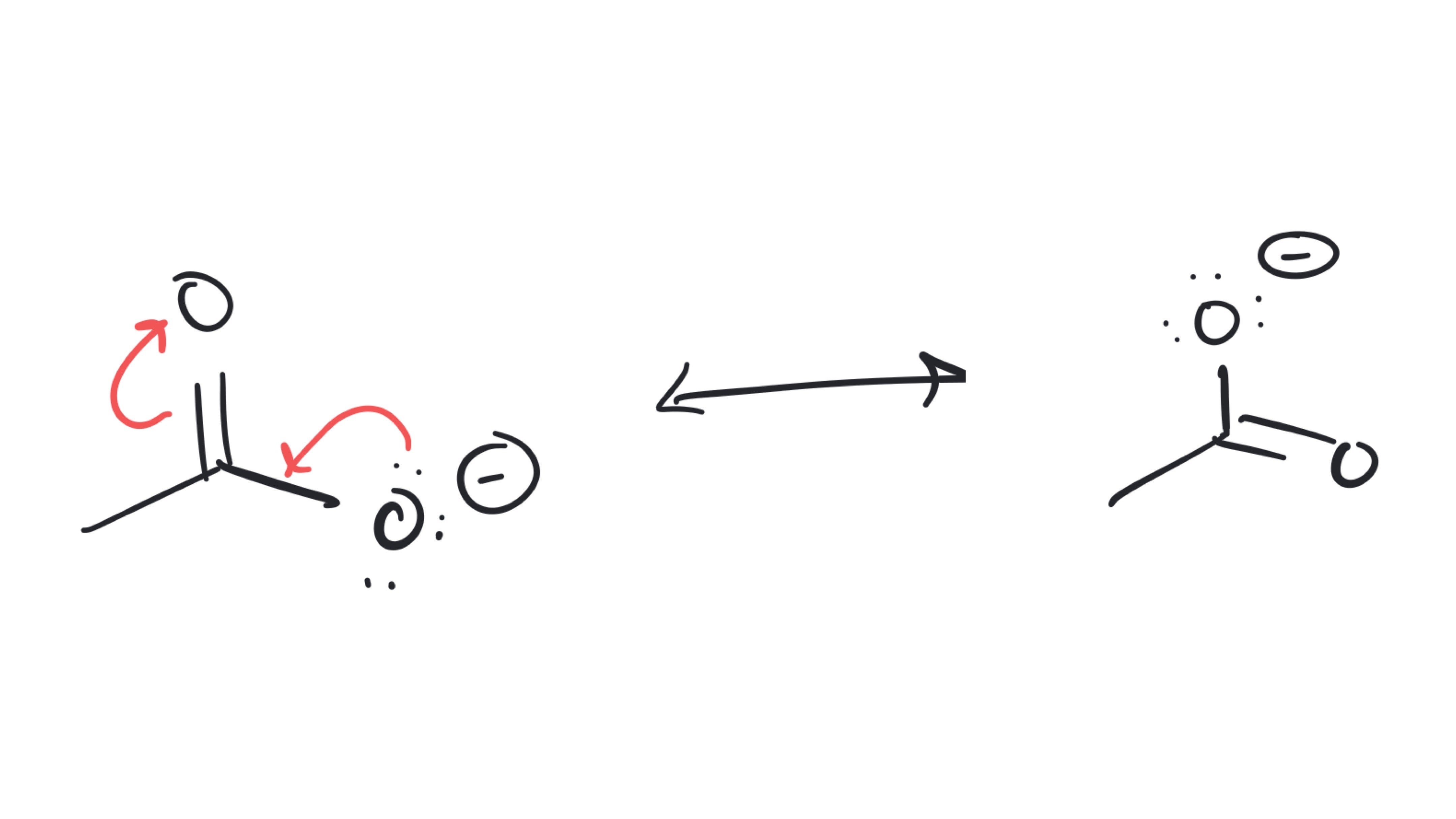
Hi Nada, the carboxylate (deprotonated carboxylic acid) is more stable than the OH anion because the carbonyl can participate in resonance with the negative charge on oxygen and 'spread out' the negative charge - stabilizing the charge via resonance. The OH anion (right side) cannot be stabilized by resonance, thus the left side of the reaction is favored at equilibrium.

Reply

Hi Melanie, when you see a functional group, or group of atoms in parentheses like (CH3CH2) above, this means that there are multiple of the same group in a molecule. Specifically, there are multiple of the same group attached to one atom (usually a heteroatom, in this case N).

Reply

Hazel a.  Are you referring to the tip at 13:54min which states that resonance occurs between sp2 hybridized atoms not sp3 hybridized atoms?

If so, this trick applies to carbon atoms, where only sp2 carbons can interact in resonance structures. Exceptions to this trick are heteroatoms (O, N, S, etc.) which can use their lone pairs to contribute to resonance structures.

The oxygen has three lone pairs and one single bond in this structure, which gives it a negative charge. The lone pairs are the reason this oxygen can participate in resonance. One of the lone pairs can form a pi bond between oxygen and carbon and the other pi bonds in the ring will shift.